














































For More Inquiry
Most women treat sleep as the first thing to sacrifice when life gets busy — a late-night deadline, a crying baby, or simply endless scrolling before bed. What often goes unrecognized is how deeply this accumulated "sleep debt" affects hormonal balance. As the best gynaecologist in Ghaziabad, Dr. Ila Gupta regularly sees patients whose hormonal symptoms trace back to chronic sleep deprivation rather than any underlying reproductive disorder.
Sleep debt refers to the cumulative effect of not getting enough sleep over days, weeks, or even months. Unlike a single bad night, sleep debt builds up gradually, and the body doesn't simply "reset" after one good night of rest. The best gynaecologist in Ghaziabad often notes that many women underestimate just how much chronic short sleep is silently disrupting their hormonal health.
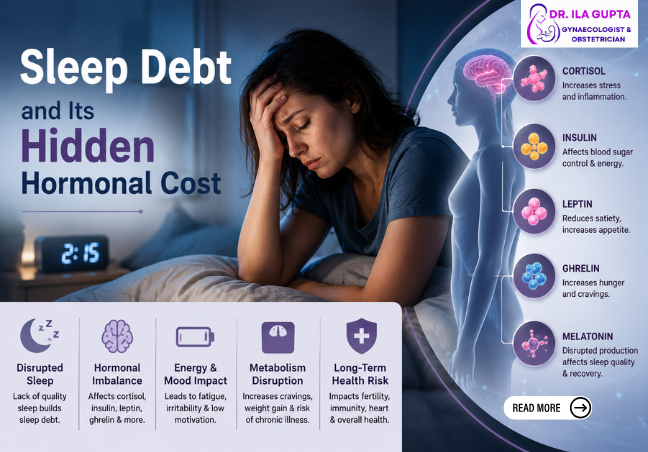
Poor sleep elevates cortisol, the body's primary stress hormone. Chronically elevated cortisol can interfere with reproductive hormone production, leading to irregular cycles and increased stress-related symptoms.
Sleep plays a critical role in regulating the hypothalamic-pituitary-ovarian axis, which controls menstrual cycles. Insufficient sleep can disrupt this delicate balance, contributing to irregular periods, worsened PMS, or fertility challenges.
Chronic sleep deprivation is linked to increased insulin resistance, which can worsen conditions like PCOS and contribute to weight gain, a cycle that further disrupts hormonal balance.
Sleep debt can influence thyroid hormone regulation, potentially contributing to fatigue, weight fluctuations, and mood changes that mimic thyroid disorders.
Melatonin, the sleep hormone, also plays a role in regulating estrogen levels. Disrupted sleep patterns can throw off this balance, affecting menstrual regularity and overall reproductive health.
Many women visit the best gynaecologist in Ghaziabad concerned about hormonal symptoms without realizing sleep debt could be a major underlying factor:
Women's hormonal systems are inherently more complex and cyclical compared to men's, making them more sensitive to sleep disruption. Additionally, factors like menstrual cycle phases, pregnancy, postpartum recovery, and perimenopause already create hormonal fluctuations — and inadequate sleep compounds these natural shifts significantly. The best gynaecologist in Ghaziabad frequently observes this heightened sensitivity, especially during major hormonal transition periods.
Poor sleep disrupts hormones, but hormonal imbalances can also disrupt sleep — creating a difficult cycle to break. For instance, conditions like PCOS or perimenopause often cause sleep disturbances directly, which then worsen the very hormonal imbalances driving those symptoms in the first place. Recognizing and addressing this cycle is a key focus when consulting the best gynaecologist in Ghaziabad for persistent hormonal or sleep-related complaints.
While individual needs vary, most adult women require 7 to 9 hours of quality sleep per night for optimal hormonal function. Consistently falling short of this, even by an hour or two nightly, can accumulate into significant sleep debt over time.
If you're experiencing persistent menstrual irregularities, unexplained fatigue, or hormonal symptoms alongside chronic poor sleep, it's worth exploring the connection rather than treating them as separate issues. The best gynaecologist in Ghaziabad can help evaluate whether sleep debt is contributing to your symptoms and guide you toward an integrated approach to hormonal health.
Sleep is often the most underestimated factor in hormonal health, quietly influencing everything from menstrual regularity to mood and metabolism. Recognizing sleep debt as a legitimate contributor to hormonal symptoms — rather than dismissing it as unrelated fatigue — can open the door to more effective, holistic treatment. Dr. Ila Gupta, known as the best gynaecologist in Ghaziabad, encourages women to view quality sleep as an essential pillar of their reproductive and hormonal well-being.
If persistent hormonal symptoms are affecting your daily life, consider both your sleep patterns and a proper medical evaluation.
Yes, chronic sleep deprivation can disrupt the hormonal signals that regulate menstrual cycles, potentially leading to irregular periods or worsened PMS symptoms.
Most adult women need 7 to 9 hours of quality sleep per night to support healthy hormonal function.
Yes, sleep debt is linked to increased insulin resistance, which can worsen PCOS symptoms and contribute to a difficult cycle of hormonal imbalance and sleep disruption.
If you experience persistent menstrual irregularities, fatigue, or mood changes alongside poor sleep, consulting a gynaecologist can help identify and address the underlying connection.
Stay informed about women's health tips, pregnancy care, and gynecological updates.