































For More Inquiry
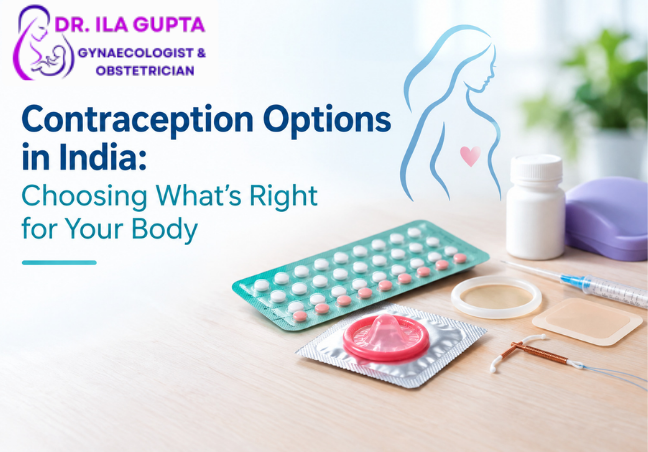
Choosing the right contraception is an important part of reproductive and sexual health. With several contraceptive options available in India, women and couples can choose a method based on their health, lifestyle, family-planning goals, and future pregnancy plans. There is no single contraceptive method that is perfect for everyone. The right choice depends on individual needs and medical suitability.
If you are unsure which option may be appropriate for you, consulting the best Gynecologist in Ghaziabad can help you understand the benefits, limitations, possible side effects, and correct usage of different contraceptive methods.
Contraception helps prevent unintended pregnancy and allows couples to plan the timing and spacing of pregnancies. Family planning can also support maternal health by reducing pregnancy-related risks associated with closely spaced or unintended pregnancies. The World Health Organization recognizes contraception as an important component of reproductive healthcare and emphasizes informed, voluntary choice.
In India, family-planning services include several spacing methods as well as permanent methods. Government health programs provide options such as oral contraceptive pills, condoms, IUCDs, injectable contraceptives, emergency contraception, and sterilization services.
Condoms are one of the most accessible contraceptive options. They act as a physical barrier that helps prevent sperm from entering the reproductive tract.
One major advantage of condoms is that they can also reduce the risk of sexually transmitted infections (STIs), including HIV, when used correctly and consistently. In fact, condoms are the only contraceptive method that also provides STI protection.
They are particularly useful for people who want a non-hormonal, easily available contraceptive option.
Birth-control pills contain hormones that help prevent pregnancy, primarily by preventing ovulation and changing cervical mucus. Some pills contain a combination of estrogen and progestin, while others contain only progestin.
Pills need to be taken regularly according to the prescribed schedule. Missing doses can reduce their effectiveness. A healthcare professional can help determine whether a particular pill is suitable based on your medical history.
The best Gynecologist in Ghaziabad can also explain how to take contraceptive pills correctly and what to do if you miss a dose.
An intrauterine device, or IUD, is a small device placed inside the uterus by a trained healthcare professional. There are two broad types:
IUDs are among the most effective long-term reversible contraceptive methods. Depending on the product, they can protect for several years, and fertility generally returns after removal. IUDs do not protect against STIs, so condoms may still be recommended when STI exposure is a concern.
Injectable contraceptives use hormones to prevent pregnancy and are administered at regular intervals. They can be an option for people who prefer not to take a daily pill.
However, injections may not be appropriate for everyone, and individual health factors should be considered before starting them. India’s National Health Mission includes injectable contraceptives among its family-planning services.
Emergency contraception is intended for situations such as unprotected sex or contraceptive failure. Options may include emergency contraceptive pills or, in appropriate circumstances, a copper IUD.
Emergency contraception should not be considered a routine replacement for regular contraception. The sooner an appropriate emergency contraceptive method is used, the better, and some options can be used within five days of unprotected intercourse.
If you need emergency contraception, speaking with a healthcare professional can help you understand the available options and timing.
For individuals or couples who are certain that they do not want future pregnancies, permanent contraception may be considered.
Permanent options include:
Because these methods are intended to be permanent, careful consideration and appropriate counselling are important before making a decision. India’s National Health Mission includes both male and female sterilization within its family-planning services.
The right contraception depends on several factors. Consider:
If you want children in the future, reversible methods such as condoms, pills, injections, or IUDs may be considered. If you have completed your family, permanent contraception may be an option.
Certain medical conditions, medications, or personal health factors can influence which contraceptive methods are appropriate. Hormonal contraception, in particular, may require medical evaluation before use.
Some people prefer a method that requires attention every day, while others prefer long-acting methods that require little ongoing maintenance.
If protection from sexually transmitted infections is important, condoms should be used because most other contraceptive methods do not provide STI protection.
Different methods can have different effects. Some people may experience changes in menstrual bleeding, cramps, headaches, mood changes, or other symptoms. Side effects vary from person to person.
A consultation with the best Gynecologist in Ghaziabad can help you compare methods based on your health history and reproductive goals instead of choosing solely based on recommendations from friends or social media.
There are several misconceptions surrounding birth control. One common concern is that modern contraception causes permanent infertility. According to WHO, modern contraceptive methods do not cause infertility, and fertility generally returns after discontinuation or removal of reversible methods.
Another misconception is that there is one universally “best” contraceptive method. In reality, contraceptive choice is highly individual. A method that works well for one person may not be suitable for another.
You should consider professional guidance if you:
A personalized consultation with the best Gynecologist in Ghaziabad can make the decision more informed and comfortable.
Contraception gives individuals and couples greater control over pregnancy planning and reproductive health. From condoms and oral contraceptive pills to IUDs, injections, emergency contraception, and permanent methods, India offers a wide range of choices.
The most suitable option depends on your health, lifestyle, relationship circumstances, pregnancy plans, and personal preferences. Instead of selecting a method based on convenience or hearsay, discuss your options with a qualified healthcare professional.
With guidance from the best Gynecologist in Ghaziabad, you can make an informed decision and choose contraception that aligns with your body's needs and your future family-planning goals.
1. Which contraception is most effective?
Long-acting reversible methods such as IUDs are among the most effective contraceptive options when appropriately used.
2. Do contraceptive pills cause infertility?
No. Modern contraceptive methods do not cause permanent infertility.
3. Do condoms prevent STIs?
Yes. Condoms can significantly reduce the risk of many STIs when used correctly and consistently.
4. Can IUDs be removed when I want pregnancy?
Yes. IUDs are reversible, and fertility generally returns after removal.
5. Can I choose contraception without consulting a doctor?
Some options are easily available, but professional guidance is recommended when choosing a method based on your health and individual needs.
Stay informed about women's health tips, pregnancy care, and gynecological updates.